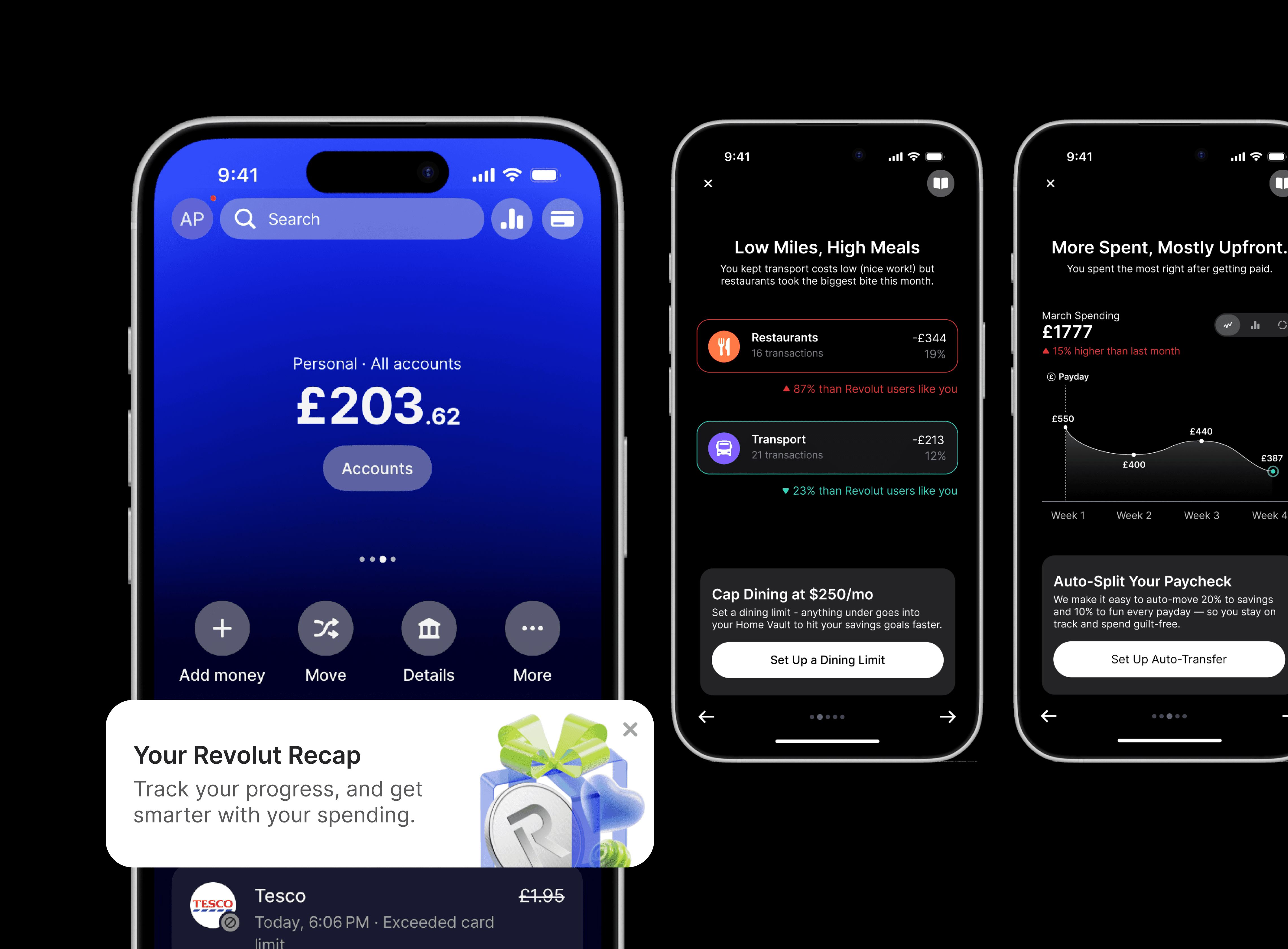
Revolut Recap: A Wrapped-Style Financial Reflection Tool
ROLE
Research, UX/UI Design, Pitch Deck Design
TEAM
1 Data Scientist, 2 Software Engineers, 2 Product Designers
DURATION
24 Hours
THE CLIENT
Revolut is a British multinational neobank and fintech company that offers banking services for over 50 million customers, including individuals and businesses.
Revolut operates in over 35 countries, continually expanding its presence across Europe, the U.S., Asia, and beyond. The company's global mission is for "every person and business to do all things money - spending, saving, investing, borrowing, managing, and more - in just a few taps.”

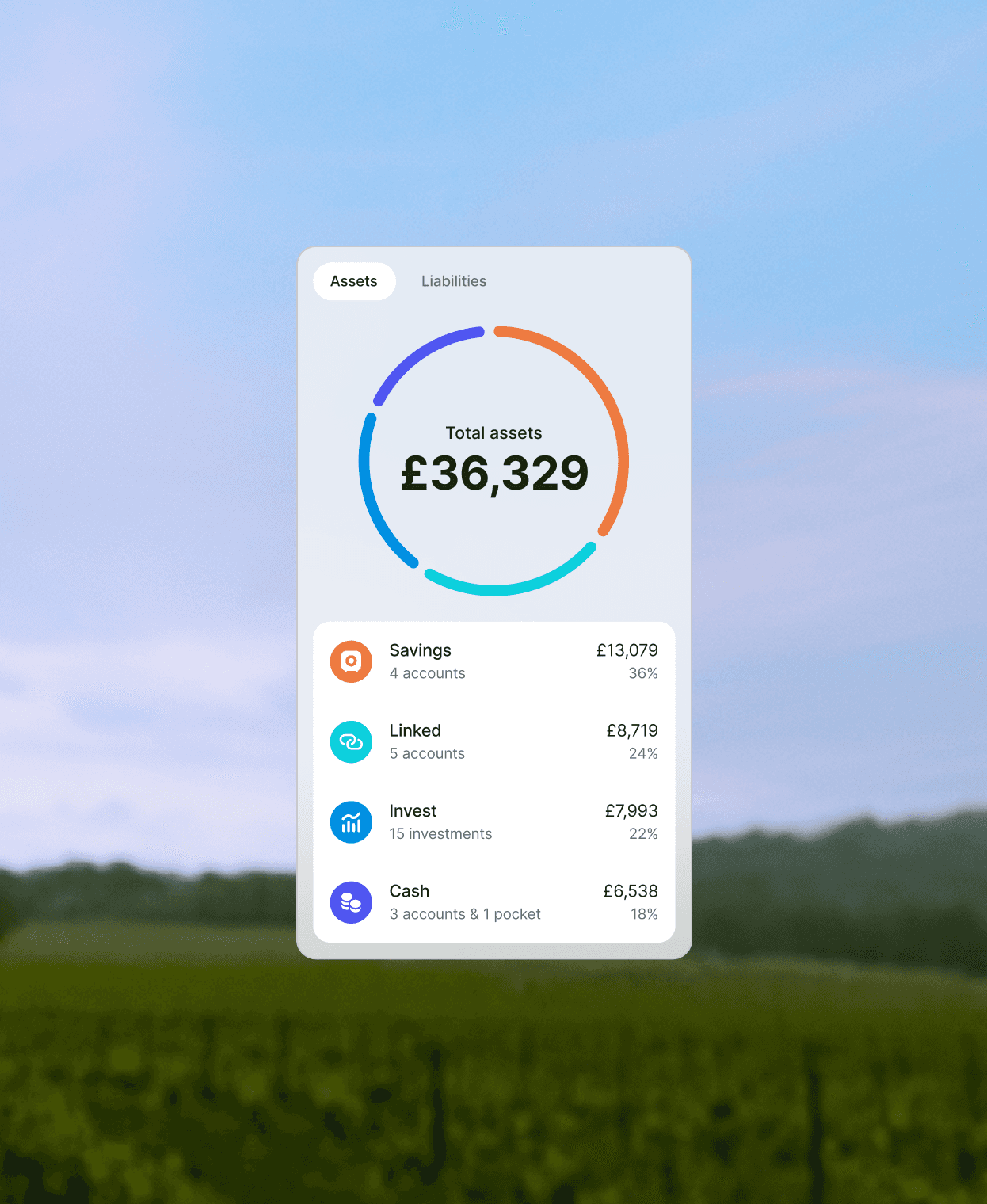
THE PROBLEM
Despite the proliferation of financial tools and platforms, research shows that customers are more vulnerable than ever.
It is in the best interests of banks to nurture financial literacy and improve access to finance education for consumers, encouraging customers to engage in practices that improve their financial and overall well being.
THE CHALLENGE
How might we help users gain a clear and intuitive understanding of their spending habits, identifying areas for potential improvement without overwhelming them with data?
THE SOLUTION
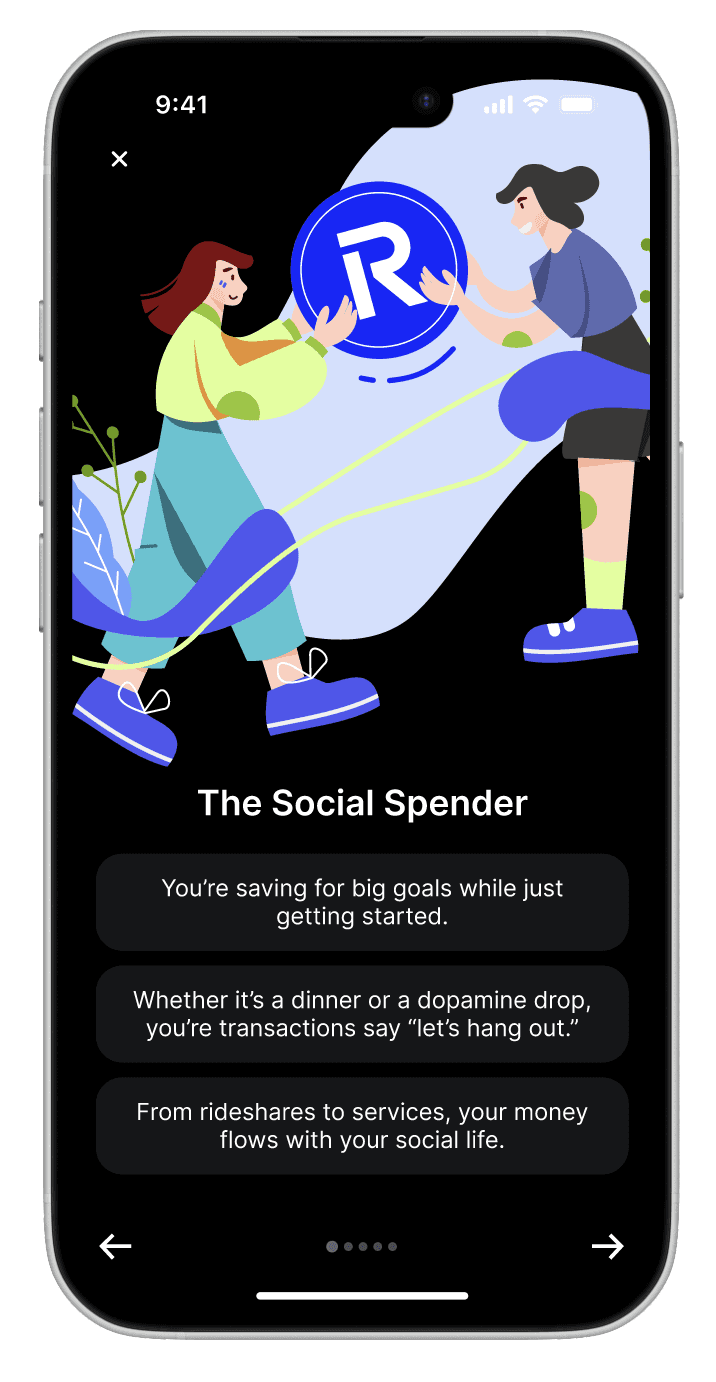
Turning financial data into identity-led insights
Archetypes summarise behavioural patterns into clear, human-readable narratives that answer one core question, “What does my spending say about me?”

Faster to understand
Easier to remember
Emotionally resonant
Designed for sharing
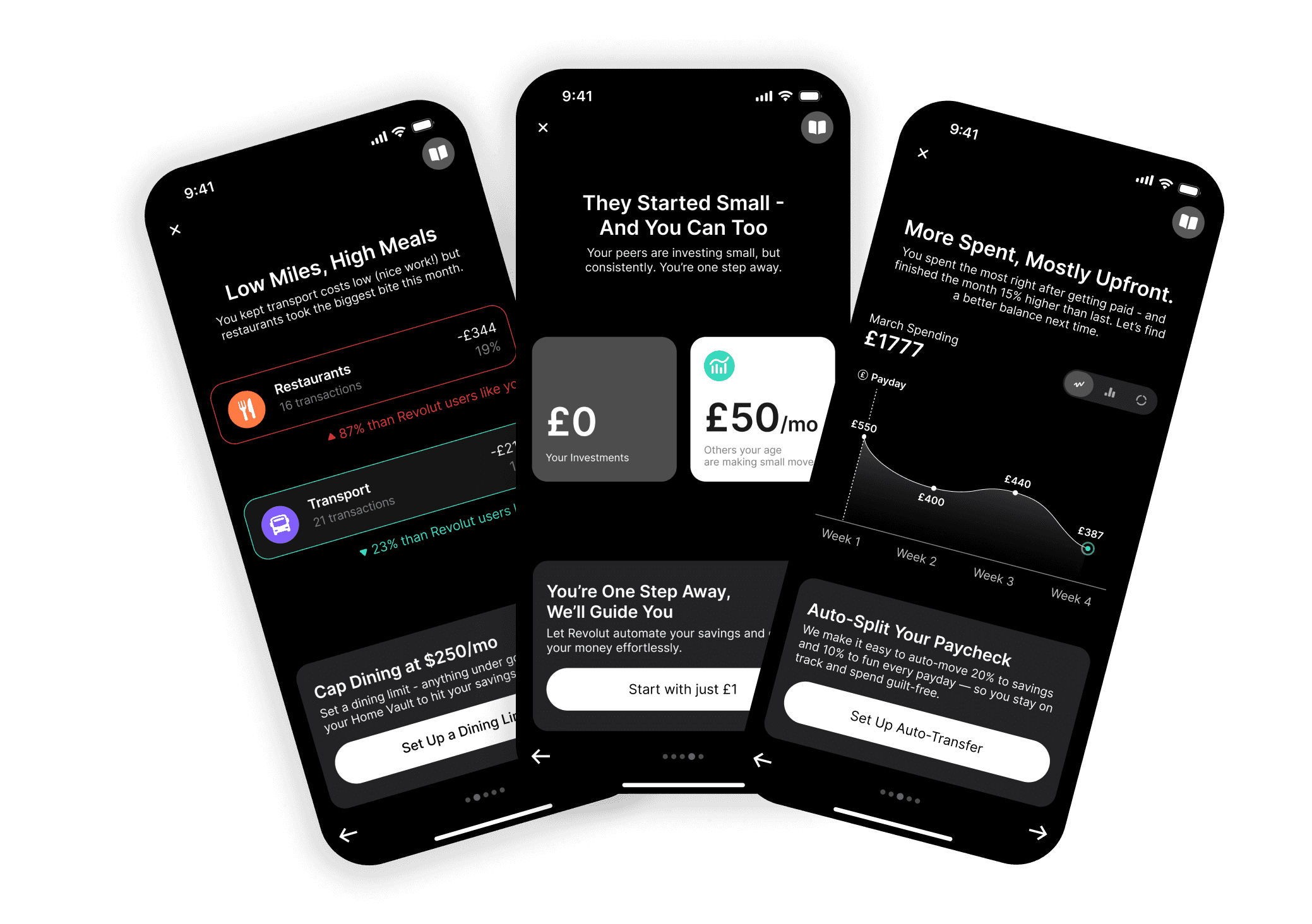
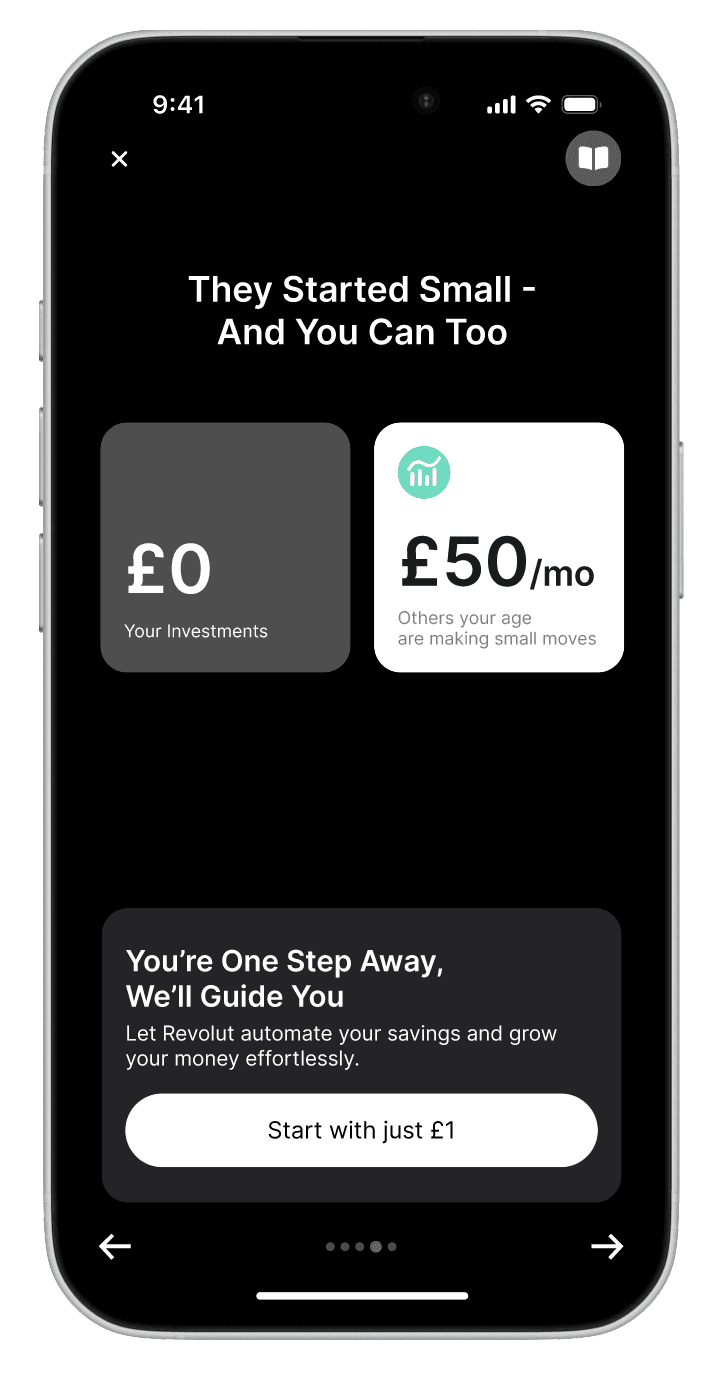
Clear, low-commitment actions tied directly to Revolut features
The experience lowers the barrier to actions like investing by reframing it as small, achievable, and socially normal, not risky or complex.
Social proof that feels reassuring, not pressuring
Low-commitment starting points
Contextual gateway to relevant product features
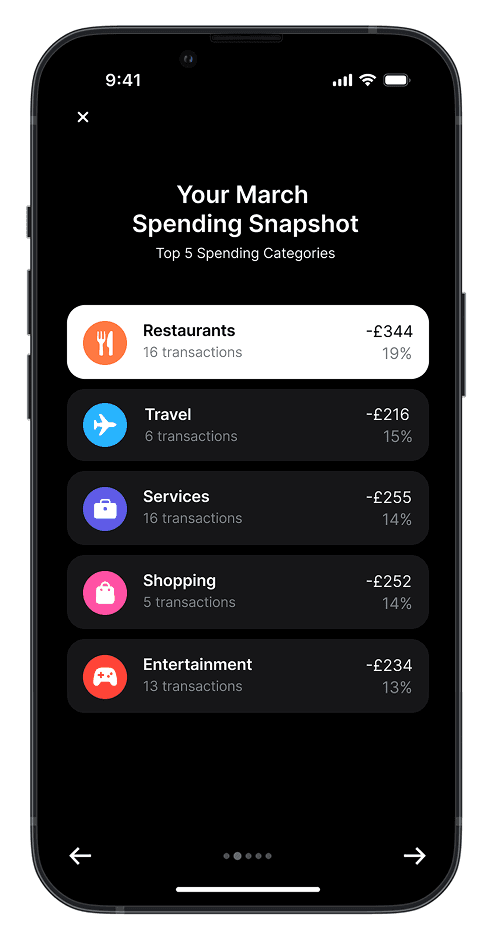
Making financial patterns instantly legible
This view surfaces the Top 5 spending categories for the month, combining totals, transaction count, and proportional impact into a single, scannable list.
Reduced cognitive load during financial reflection
Faster comparison across categories
DISCOVER
PRIMARY RESEARCH
We conducted 12 interviews over the phone with young adults in their 20s to understand how they currently manage spending and how they feel about financial planning.
This revealed a gap between access to data and ability to act on it.
75%
62%
67%
CURRENT STATE OF FINANCIAL EDUCATION
4
COMPETITOR ANALYSIS
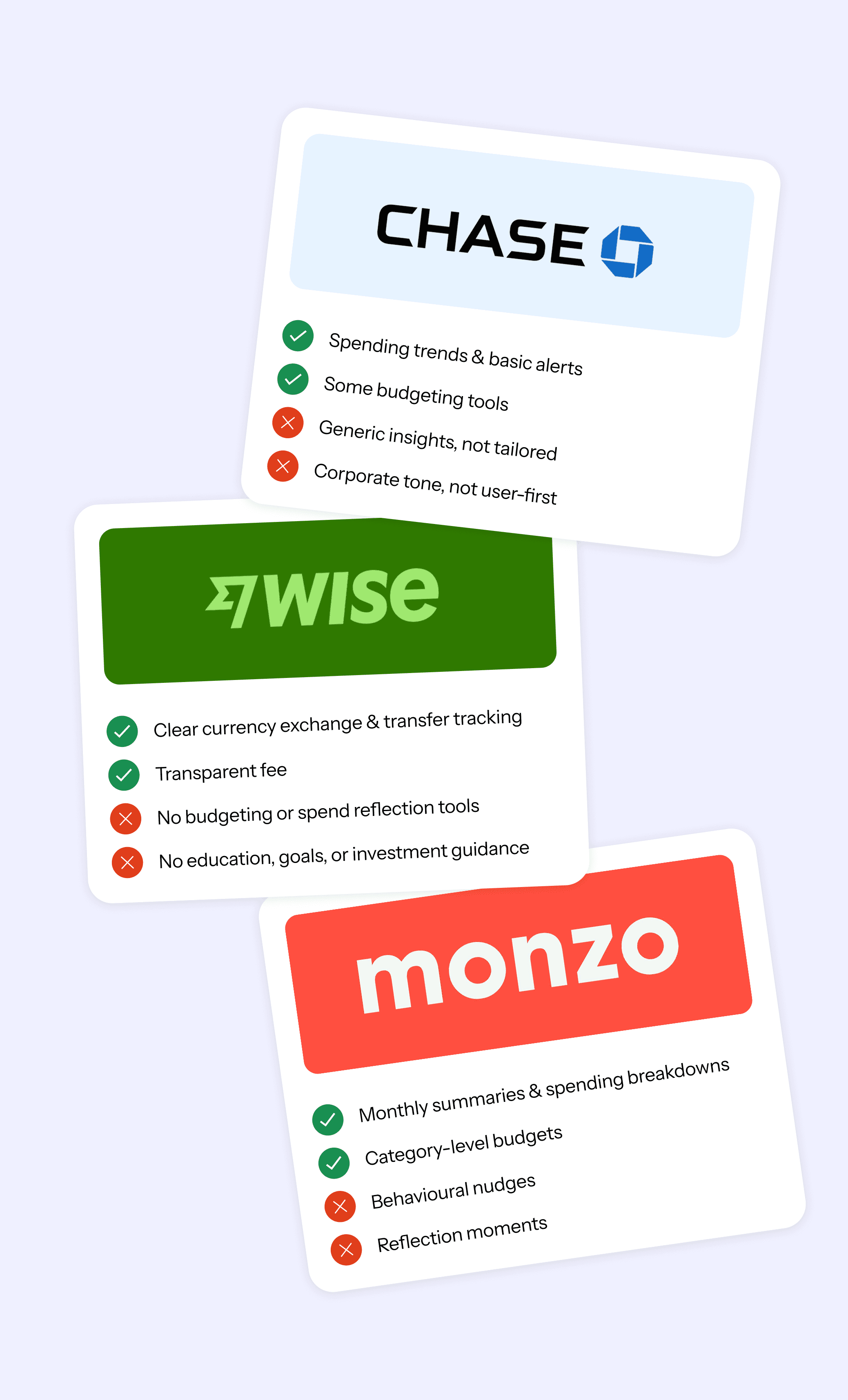
We reviewed competitors including Monzo, Chase, and Wise to understand how others approach spending insights. We found that competitors track and present. They don’t teach or guide.
This validated the need for a more human, insight-driven approach.
AUDITING EXISTING FUNCTIONALITIES
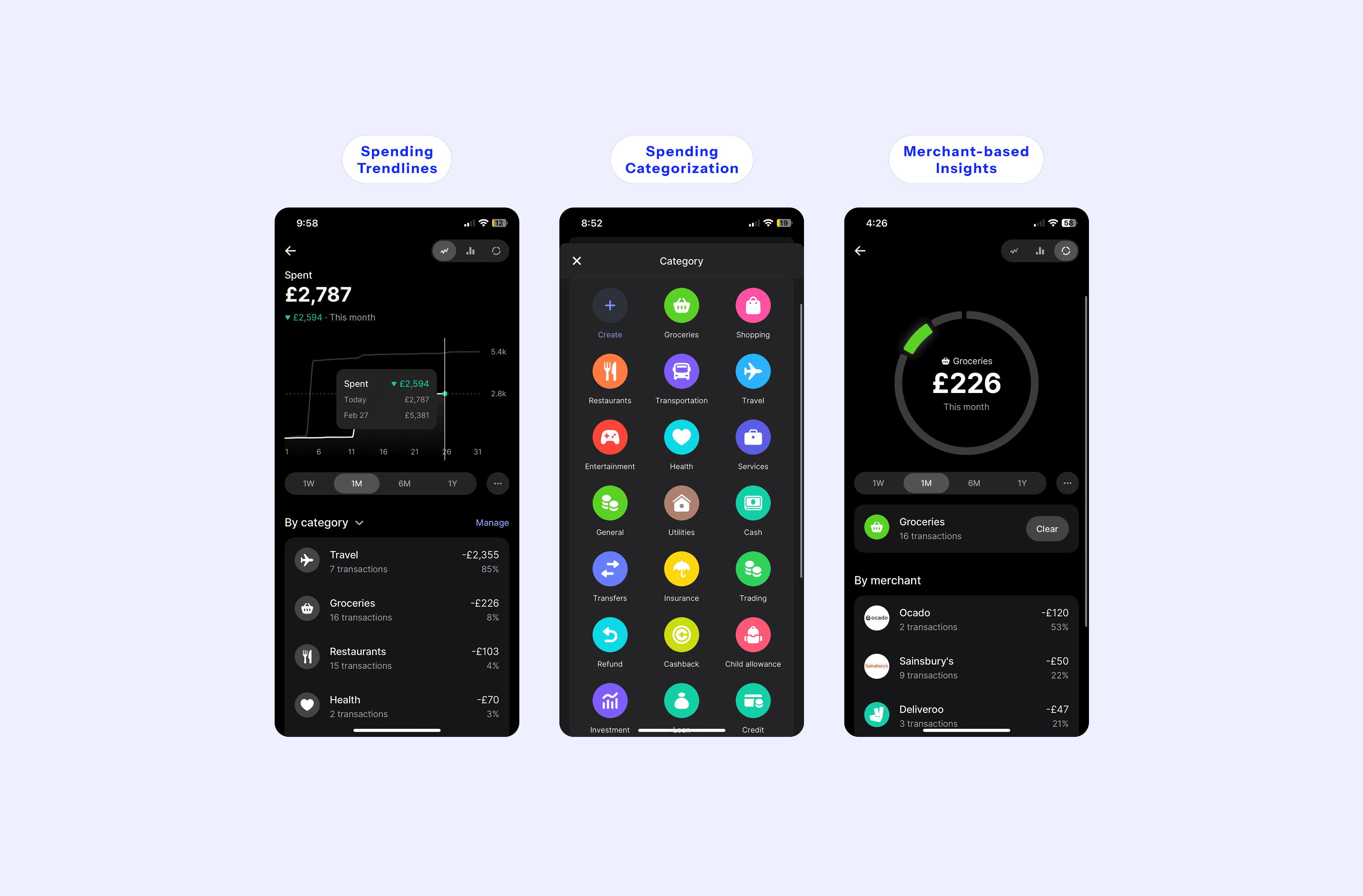
To ground our solution in real constraints, we audited Revolut’s current in-app spending and budgeting features.
DEFINE
PROTO-PERSONA DEVELOPMENT
To better understand the behaviours, motivations, and pain points of emerging musicians, I conducted interviews with 4 artists at different stages of their creative journeys.
This included singer/songwriters and producers who were either actively releasing music or consistently collaborating with others. From affinity mapping, I found 4 key themes that I took forward with me into the next stages of the project.
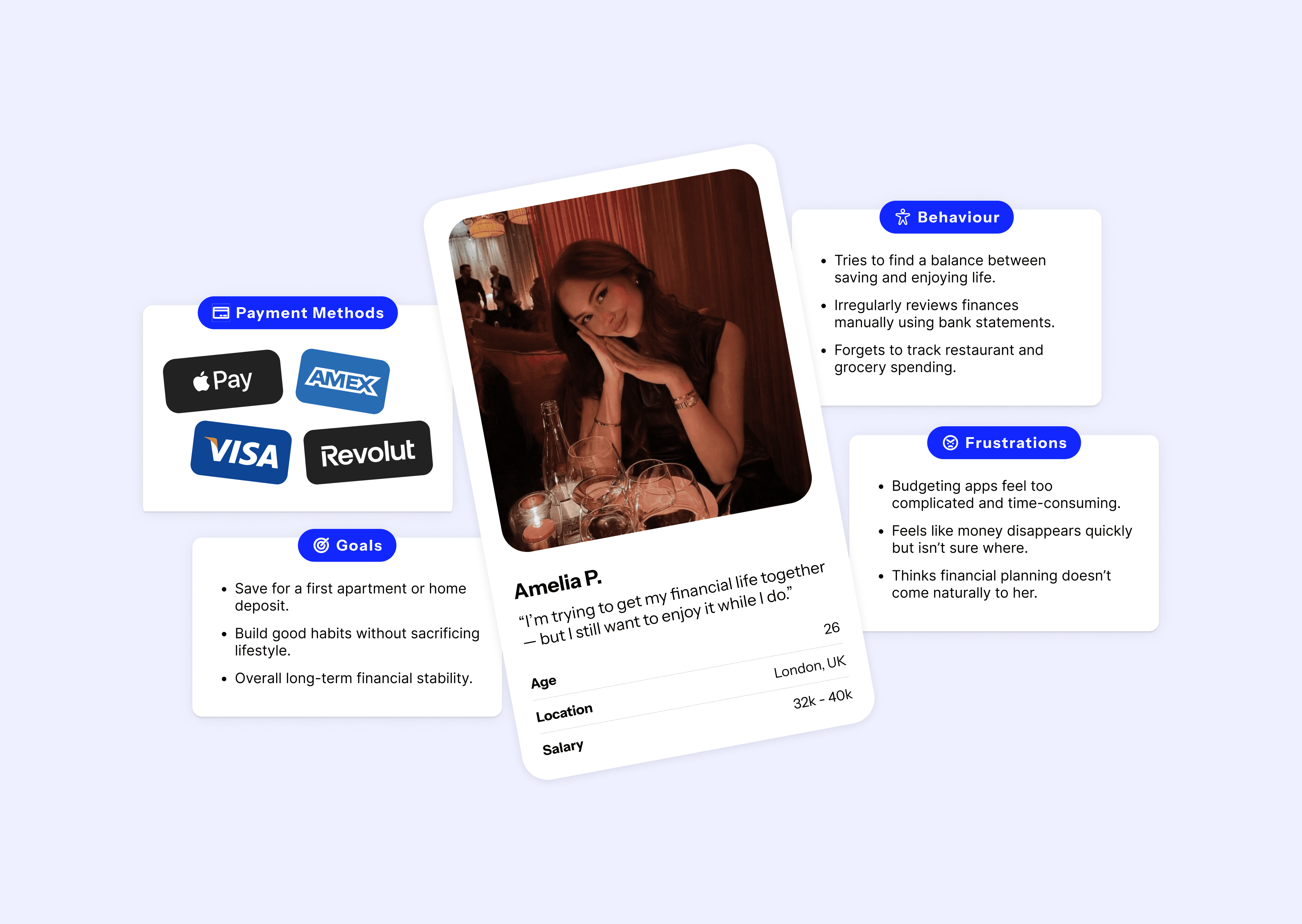
HOW MIGHT WE QUESTION
Young professionals have access to detailed financial data, but struggle to interpret it, relate to it, and act on it - often leading to avoidance rather than improvement.
DEVELOP
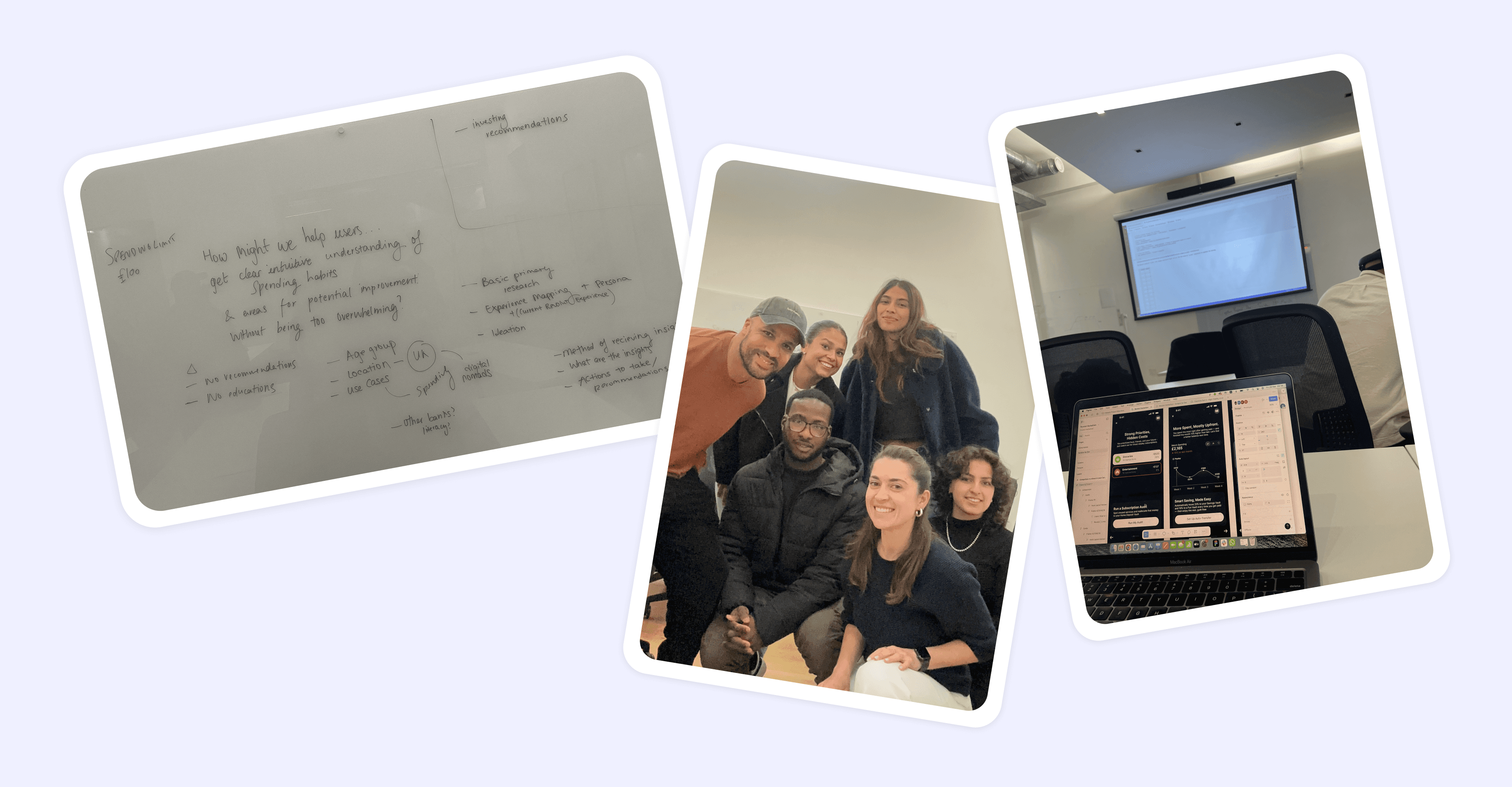
Now, it was time to build. With a clock ticking, we got together, did a crazy 8 and voted upon ideas that first, solved the problem at hand and second, was exciting to us to pitch to the judges.
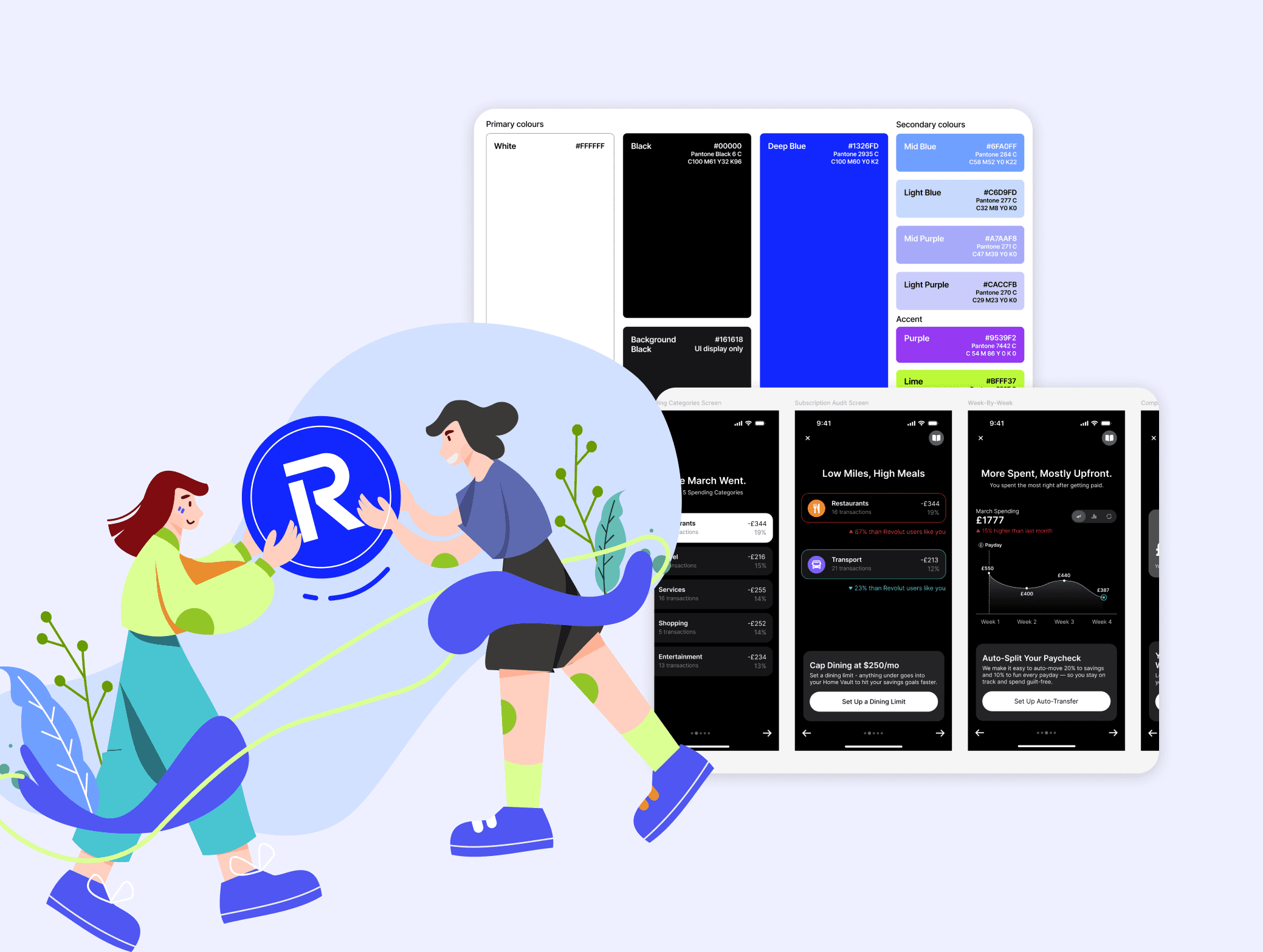
KEY DESIGN DECISIONS
Content Hierarchy
Each screen answers:
What is the pattern?
How does it compare to other users?
What can I do next?
Social proof adds context, while actions drive follow-through.
Product Ecosystem Integration
Insights naturally link to:
Savings
Investing
Budgeting tools
This encourages feature discovery without aggressive upselling.
CHALLENGES FACED
DELIVER
To better understand the behaviours, motivations, and pain points of emerging musicians, I conducted interviews with 4 artists at different stages of their creative journeys.

IF WE CONTINUED THE PROJECT,
NEXT STEPS WOULD BE,
Lightweight user testing to validate clarity and usefulness
Using behavioural metrics such as completion rate, time-to-insight, and interaction with recommended actions.
A/B test different insight framings and copy to understand which versions drive higher action rates.
FEEDBACK CONSIDERED
We initially used the headline ‘Where March went’, but judges feedback highlighted that it implied loss or regret.
We iterated on the copy to adopt a more neutral, empowering tone - aligning better with Revolut’s values of financial clarity without judgment.